
Law
Navigating the Complexities of Commercial Vehicle Collision Claims
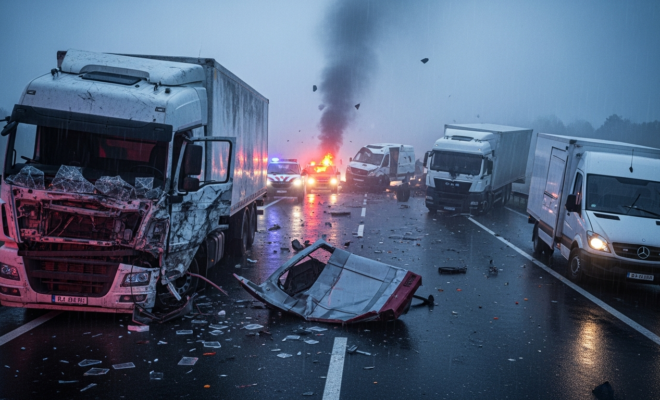
Collisions involving heavy trucks or delivery vans are not just larger versions of a typical car crash. They change the entire legal landscape because of the size and weight of these vehicles. A standard passenger car cannot withstand the force of a multi-ton truck, especially during a high-speed impact.
These cases also bring in layers of corporate insurance and federal regulations that do not apply to everyday drivers. Understanding how interstate commerce laws intersect with local traffic rules is essential. On top of that, large companies often have dedicated teams focused on protecting their interests after a serious incident.
Handling the aftermath of a commercial crash takes persistence and a clear approach. A proper claim involves a detailed investigation into both the driver and the company behind the vehicle. Reaching a fair outcome depends on holding every responsible party accountable for their role.
Identifying the Stakeholders
Determining exactly who is responsible for a collision involving a business vehicle is rarely a simple task. While the person behind the wheel is the most obvious participant, the web of liability often extends much further back into the corporate office. Identifying potential defendants requires a look at the parent companies and the third party contractors who manage operations.
Maintenance contractors may be liable if a mechanical failure, such as a tire blowout or brake malfunction, contributed to the crash. If a company failed to perform required safety checks, they share the blame for the resulting damages. This layered approach ensures that the true cause of the incident is addressed rather than just the immediate error.
Vicarious liability is a central concept in holding businesses accountable for the actions of their employees while on the clock. It establishes that an employer is responsible for the harm caused by a driver performing their professional duties. This legal principle ensures that victims have access to the resources of the corporation that benefited from the work.
The Role of Digital Evidence
Modern commercial vehicles are equipped with a suite of digital tools that record every second of a journey. Electronic Logging Devices provide an objective look at how long a driver has been behind the wheel without a mandatory rest break. This data is essential for proving that exhaustion or fatigue played a role in a serious traffic incident.
Black box data from the engine can reveal the exact speed and braking patterns in the moments leading up to the impact. This technical information removes the guesswork from accident reconstruction and provides a factual baseline for the investigation. Comparing this data with driver statements often reveals discrepancies that are vital for proving a negligence claim.
Corporate logbooks can also reveal systemic violations in service hours or weight limits that put the public at risk. If a company consistently pressures drivers to skip rest periods, they are creating a hazardous environment for everyone on the road. Uncovering these patterns is a key step in building a compelling narrative for the court system.
Protecting the Evidence Chain
Dealing with high-limit insurance policies means facing aggressive legal teams that are trained to minimize corporate exposure. These defenders will look for any opportunity to shift the blame or dismiss the severity of the victim’s injuries. They often arrive at the scene within hours to begin their own version of the investigation for the company.
Evidence spoliation is a significant risk in the weeks following a major truck or van collision. If a vehicle is repaired or data is overwritten before it can be inspected, the chance to prove negligence may be lost forever. Protecting the integrity of the evidence is a top priority for anyone seeking a fair and just resolution.
Sending immediate preservation letters to the carrier and the parent company is a necessary step to halt the destruction of records. These formal notices require the entity to save all logbooks, maintenance reports, and digital data related to the incident. Having this legal guardrail in place ensures that the truth is available when the case moves forward.
Conclusion
Challenging a major commercial entity requires a level of persistence that most survivors struggle to maintain on their own. The road to recovery is often long and filled with technical hurdles that demand a disciplined and organized approach. Staying focused on the long term goal is the only way to ensure that justice is eventually served.
Every corporate-level incident is a reminder of the responsibilities that come with operating heavy equipment on public roads. When those duties are ignored, the legal system provides a framework for seeking the accountability that victims deserve. Moving forward with a clear strategy allows a family to reclaim their stability after a major professional failure.
Seeking a path toward recovery after a large scale event is a journey that requires support and professional guidance. By following the facts and protecting the evidence, it is possible to hold the powerful accountable for their actions. A successful resolution provides the resources needed to step back into a normal and secure life today.


0 comments