
Law
The Intersection Trap and the Danger of Misjudging Oncoming Gaps
Intersections are the busiest parts of any city layout, serving as the points where diverse traffic patterns finally converge. Every time a driver approaches a crossroad, they enter a space where dozens of variables change in an instant. A single mistake here carries heavy weight.
Navigating these areas safely requires more than just following the lights on the pole. It demands constant awareness of pedestrians, cyclists, and other motorists who might be rushing to beat a changing signal or looking at their phones. Focus is the only real protection.
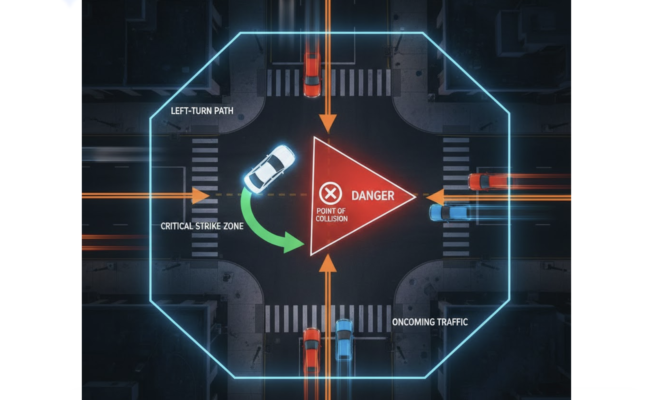
Legal disputes often arise here because determining exactly what happened during a split-second decision is incredibly difficult. Most local insurance disputes and injury lawsuits stem from left turn accidents where one party failed to yield properly to oncoming vehicles. These events happen in a flash.
The Tricky Physics of Yielding to Traffic
Yielding the right of way seems simple enough on paper, but the reality on the asphalt is much more complicated. A driver waiting to turn across traffic must estimate the distance and speed of approaching cars with remarkable accuracy.
Human eyes often struggle to judge the velocity of a vehicle coming straight toward them. Depth perception can fail in low light or heavy rain, making a distant car appear much slower or further away than it actually is at that moment.
Once the front tires cross that line, there is no going back for the motorist. Miscalculating that gap by even a half-second leads to a situation where the oncoming driver cannot stop in time to avoid a heavy collision. Precision is truly everything here.
When Concentration Slips During the Wait
Waiting for a break in traffic or a green arrow can feel like an eternity during a busy commute. This downtime often leads to a dangerous drop in focus as drivers reach for their coffee or glance at a notification on their dashboard.
This distracted state makes it hard to react when the light finally changes or a legitimate gap appears in the flow of cars. A driver might hit the gas out of habit without re-checking the current state of the intersection first.
External pressures from vehicles waiting behind can also force a person into making a move they aren’t ready for. The sound of a horn often triggers a panicked reaction that overrides the better judgment needed to stay safe and stationary.
The Brutal Impact of Side Entry Collisions
A side-impact crash is uniquely dangerous because vehicles have very little structural protection on their doors compared to the front or rear. The thin layers of metal and glass do very little to absorb the energy of a heavy engine block.
Passengers are often sitting just inches away from the point of contact during these events. This proximity leads to severe injuries involving the ribs, hips, and shoulders as the cabin of the car crumples inward under the weight of the strike.
Even with side-curtain airbags, the rapid displacement of the car can cause significant trauma to the brain and spine. The violent lateral movement tosses occupants around the interior, creating a chaotic environment where safety belts can only do so much.
Gathering the Pieces of the Intersection Puzzle
Proving who had the right of way after a crash requires a deep dive into the specific timing of the traffic signals. Investigators look for patterns in the light sequence to see if one driver entered the box on a yellow.
Witness statements and nearby surveillance footage from businesses are the primary tools used to piece together the timeline. These external records often contradict the stories told by the involved parties, providing a much clearer picture of the mechanical reality.
Forensic experts can also look at the damage and skid marks to calculate the speed of the non-turning vehicle. If a driver was traveling well above the limit, their speed might have contributed more to the accident than the initial turn.
Maintaining safety at a busy crossroad is about more than just patience. It requires a disciplined approach to reading the road and accepting that a few minutes of delay is a small price to pay for reaching a destination safely.
Clear visibility and precise timing are the best defenses a driver has against the unpredictable nature of city traffic. If there is any doubt about the size of a gap, staying put is always the superior choice for everyone.
Taking responsibility for every move ensures that the risks of the road are managed effectively. By respecting the flow of traffic and staying alert, motorists can avoid the common traps that turn a simple commute into a tragedy.


0 comments