
Agriculture
Transformation of Modern Agriculture
Dynamic Shift in Global Farm Operations and Trade
Agricultural markets are undergoing unprecedented challenges and rapid changes that are fundamentally altering the way food is grown, processed and sold around the world. Producers have been operating in a complex environment, with geopolitical tensions, changing weather patterns and economic fluctuations. Farm input costs, including synthetic fertilizers, specialized equipment, and diesel fuel, have had wild price fluctuations. These rising overhead costs are directly affecting farm income and forcing growers to rethink traditional operating models to remain profitable. And key international trade routes for essential commodities such as wheat, corn and soybeans continue to adjust to changing supply chains, with implications for global market dynamics and export strategies.
Traditional farming methods are coming under increasing financial and environmental pressure, and the global agricultural industry is turning to precision management and optimization of resources. Governments and international trade bodies are increasingly stepping in with targeted financial frameworks, subsidy programs and policy upgrades to stabilize local food supply chains. However, inflationary pressures on equipment and land acquisition require strategic planning and maximum operational efficiency in the expansion. Modern management is not about total output volume alone; farmers are now focused on maximizing yield per acre with minimizing wasted resources, reducing soil degradation, and protecting local watersheds.
Artificial Intelligence and Next Generation Automation Integration
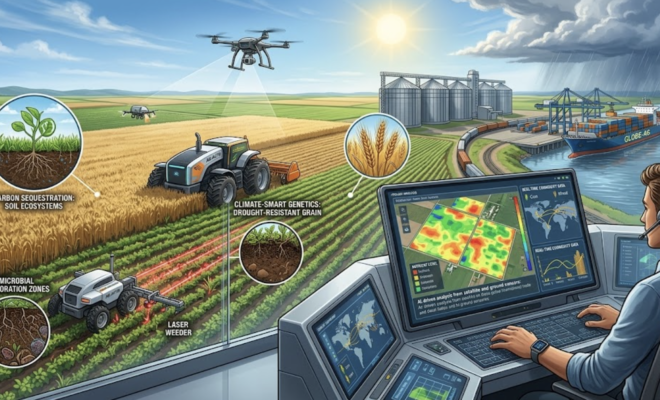
Farming is undergoing a huge technological revolution to address chronic labor shortages and rising production costs. Artificial intelligence, high-resolution satellite mapping and autonomous field machinery are moving from experimental innovations to essential operational tools. In real time, current crop monitoring systems employ machine learning algorithms to analyze satellite imagery, aerial drone scans and sensor data from the ground. This constant flow of information allows farm operators to detect nitrogen deficiencies, fungal outbreaks and pest infestations weeks before the naked eye can see symptoms.
Physical automation, too, is rapidly expanding in field management beyond diagnostic software. Autonomous tractors, robotic harvesters and smart irrigation systems that work with extreme precision are now taking over labor-intensive jobs. One type of specialized laser weeding machine will autonomously move between rows of crops and uses laser pulses to search for the weeds, rather than blanket chemical applications. This approach helps reduce herbicide costs and protects the health of the crop. Also, data modernization by government agricultural departments is making it simpler for farmers to report, eliminating the need for tedious paperwork and introducing automated data collection directly from equipment in the field.
Resiliency to Climate and Sustainable Soil Management
The one major factor that continues to impact regional crop production are extreme weather events such as extended periods of heat, erratic rainfall and extreme droughts. Biological research and plant genetics are moving at breakneck speed to protect the world’s food supply from these mounting threats. The development of climate-smart crop varieties that can withstand extreme environmental stresses without compromising quality or yield is a major focus in agricultural science. Drought-tolerant maize, heat-resistant grain lines and disease-resistant legumes are becoming the go-to option for producers who are wary of risk and seeking stability in uncertain growing seasons.
Alongside genetic progress, sustainable land management practices are gaining great traction worldwide. Soil health programs, cover cropping, minimum tillage and organic biological inputs are replacing the heavy chemical regimes of convention. New financial opportunities are emerging for growers to capture atmospheric carbon in agricultural soils through carbon credit markets and sustainability incentives. Modern agriculture is focusing on soil biology, and actively working to improve water retention, reduce erosion and restore vital microbial ecosystems. These interlinked advances in technology, policy and biological science are a testament to a resilient industry that is changing fast to feed a growing population while safeguarding vital natural resources for future generations.


0 comments