
Technology
Smart Glasses vs. Fitness Trackers: Do You Need Both?
Wearable technology has quietly become part of everyday fitness. A few years ago, tracking a workout often meant writing down your results after a session or simply remembering how you felt. Today, athletes and fitness enthusiasts can measure everything from heart rate and sleep quality to training intensity and recovery.
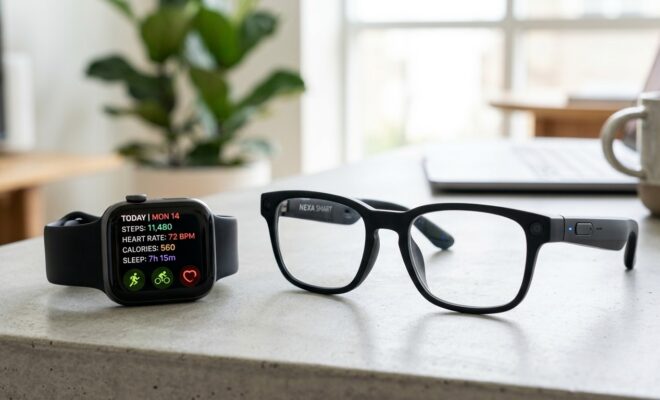
At the same time, wearable technology has expanded beyond the wrist. Smart glasses are entering the conversation, offering a different type of experience by adding hands-free cameras, audio, and AI features to something people already wear.
This has created a common question among active people: do you need both a fitness tracker and smart glasses, or is one device enough?
The answer depends on what you want to get from your technology. While both fall under the wearable category, they are designed to solve different problems. One focuses on understanding your body, while the other focuses on helping you interact with the world around you.
What Fitness Trackers Are Actually Good At
Fitness trackers have become popular because they do one thing extremely well: they help people understand their health and performance over time.
Modern fitness trackers and smartwatches can monitor heart rate, sleep patterns, steps, calories burned, blood oxygen levels, and heart rate variability. While any single measurement can be interesting, the real benefit comes from looking at patterns.
For example, one difficult workout does not tell you much about your overall fitness. However, noticing changes in your recovery, resting heart rate, or sleep quality over several weeks can help you understand whether your training routine is working.
This is where fitness trackers continue to have an advantage. Since they are worn on the wrist throughout the day, they can collect consistent information and create a longer-term picture of your habits.
For runners, gym-goers, and athletes focused on improving their performance, that data can be incredibly useful. It helps answer questions like whether you are recovering properly, whether your training intensity is increasing too quickly, or whether your daily habits are affecting your results.
A fitness tracker is not just about collecting numbers. It is about using those numbers to make better decisions.
What Smart Glasses Bring to the Table That Fitness Trackers Cannot
Smart glasses approach fitness from a completely different direction.
Instead of focusing on measuring your body, they focus on making everyday activities easier by keeping technology accessible while your hands are busy.
For athletes, this can be especially useful during activities where stopping to check a phone is inconvenient. A runner may want audio guidance without wearing traditional earbuds. A cyclist may want navigation support while staying aware of the environment. A content creator may want to capture training footage without carrying a camera.
One of the biggest differences is the first-person perspective that smart glasses provide. Traditional cameras show what an athlete looks like during a workout, but wearable cameras can show what the athlete actually sees.
This perspective can be especially useful for athletes who train alone and want to review their technique or capture their sessions without stopping to adjust equipment. Whether it is a running route, a cycling session, or a training drill, Meta sunglasses allow athletes to capture these moments from their own viewpoint while keeping their hands free and staying focused on the activity.
That hands-free approach is what makes smart eyewear interesting for active lifestyles. Instead of adding another device to manage during a workout, the technology becomes part of the activity itself.
Where the Two Categories Overlap and Where They Do Not
The biggest difference between smart glasses and fitness trackers comes down to the type of information they provide.
Fitness trackers are focused on internal data. They measure things happening inside the body, such as heart rate, sleep, recovery, and activity levels.
Smart glasses focus more on external interaction. They help users capture what they see, access information, communicate, and use technology without constantly reaching for another device.
There is some overlap as smartwatches become more advanced. Many now include voice assistants, notifications, and other smart features. However, the main purpose of each device remains different.
A fitness tracker helps you understand your physical performance. Smart glasses help you interact with your surroundings while staying active.
For people who want both types of feedback, the two devices can work together instead of replacing each other.
The Case for Owning Both
For athletes who take training seriously, using both devices can create a much more complete picture.
A fitness tracker can provide the data behind a workout. It can show heart rate zones, pace, recovery trends, and other measurements that help athletes understand their progress over time.
Smart glasses can capture the experience of the workout itself. They can record from the athlete’s point of view, provide hands-free audio, and make it easier to review moments that would otherwise be difficult to capture.
For example, a runner could use a fitness tracker to monitor pace and heart rate while using smart glasses to record the route and surroundings. A basketball player could track physical effort while reviewing drills from their own perspective.
Neither device replaces the other because they answer different questions.
One tells you what your body is doing. The other helps you understand what you are experiencing.
When One Is Enough
Of course, not everyone needs multiple wearable devices.
For many people, a fitness tracker is more than enough. If your main goals are improving general health, monitoring workouts, and building better habits, a smartwatch or fitness band can provide plenty of useful information.
Smart glasses may make more sense for people who have different needs. Outdoor athletes, independent trainers, content creators, and people who want a more hands-free experience may find more value in wearable eyewear.
The best choice is not about owning the most technology. It is about choosing tools that actually improve your routine.
A device only helps if you use the information it provides.
Conclusion
Smart glasses and fitness trackers are often compared because they are both wearable technologies, but they are built for different purposes.
Fitness trackers help people understand their health and performance through data. Smart glasses make it easier to capture experiences, access information, and stay connected while moving.
For athletes who want a deeper understanding of both their performance and their training experience, using both devices can make sense. For others, starting with the wearable that solves their biggest challenge is the better choice.
The most valuable piece of technology is not always the one with the most features. It is the one that fits naturally into your lifestyle and helps you get more out of the activities you already enjoy.


0 comments